

Team Blitz India
NHS Blood and Transplant (NHSBT) has appealed for O Positive and O Negative blood donors to urgently book appointments at designated centres across England following a cyber-attack that affected major London hospitals.
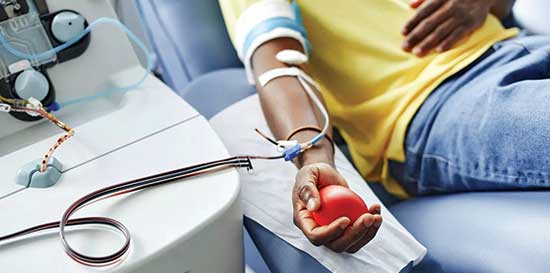
Such donations can be made in one of the 25 town and city centre NHS Blood Donor Centres in England to boost stocks of O type blood.
Russian group
The ransomware attack, alleged to have been carried out by a Russian group, has forced London NHS hospitals to return to paper records where due to the network disruption, porters have to hand-deliver blood test results.
On June 10 the NHS shared that three blood donations were needed every minute that week in hospitals to deal with emergencies, childbirth and routine treatments as it calls on more people to become lifesaving donors.
The week (June 10-16), declared as National Blood Week, saw the launch of a big push for new donors ahead of summer.
There were around 13,000 appointments available nationally that week in NHS Blood Donor Centres with 3,400 available in London alone. The NHS also advised patients to continue coming forward as in normal times, despite the cyber-attack.
It explained that for surgeries and procedures requiring blood to take place, hospitals need to use O type blood as it is safe for use for all patients. However, since blood has a shelf life of 35 days, stocks need to be continually replenished, added the NHS media statement.
Thus, more units of these types of blood will be required than usual over the coming weeks to support the wider efforts of frontline staff to keep services running safely for local patients, it shared. Blood of O negative type can be given to anyone. It is known as the universal blood type, the NHS stated.
It is used in emergencies or when a patient’s blood type is unknown. Air ambulances and emergency response vehicles carry O negative supplies. Just about 8% of the population have type O Negative but it makes up for around 15% per cent of hospital orders.
Common blood type
O positive is the most common blood type, with 35% donors having it. It can be administered to anybody with any positive blood type. This means three in every four people, or 76% of the population, can benefit from an O positive donation, the statement said further.