

Team Blitz India
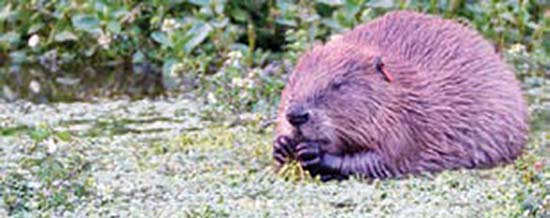
Nature has its unique way of protecting the environment. This was again proven in East Anglia where a project to reintroduce beavers has successfully reduced the impact of flooding and drought by storing millions of litres of water over five years.
Five years ago, Spains Hall Estate in Essex and Environment Agency had released the first pair of beavers in East Anglia to balance food production, water and the environment. “We are the proud home of the first beavers to return to Essex for over 400 years,” says the website of Spains Hall Estate.
With free reign across a 10-acre woodland stream, the beaver family, now numbering 11, has created 9 dams, shared a recent statement from the UK’s Environment Agency. These are estimated to store 3 million litres of water in ponds covering almost a quarter of the woodland, it added.
An animation produced by catchment-scientists from AtkinsRéalis reveals the scale and speed of the changes occurring over five years.
Data collected by Kings College London demonstrates that the way water flows across the farm has also changed. The beavers increasingly build bigger dams to trap more water each time it rains. These changes mean that storm water flows downstream more slowly, some even being held for several months as it’s slowly released back into the river. This helps alleviate low river water levels in summer.
Beavers are a ‘keystone species’ in wetland ecology, which create ecosystems that provide habitats for many other plant, insect and mammal species, the statement explained.
For this reason, beavers are often referred to as “ecosystem engineers” and are known for their ability to fell trees to dam shallow watercourses and create pools to make them feel safe.
The associated wetlands, interconnecting beaver canals, coppiced woodland, glades and deadwood provides rich and diverse habitat for an abundance of wildlife. This includes plants, insects, amphibians, reptiles, birds and mammals.